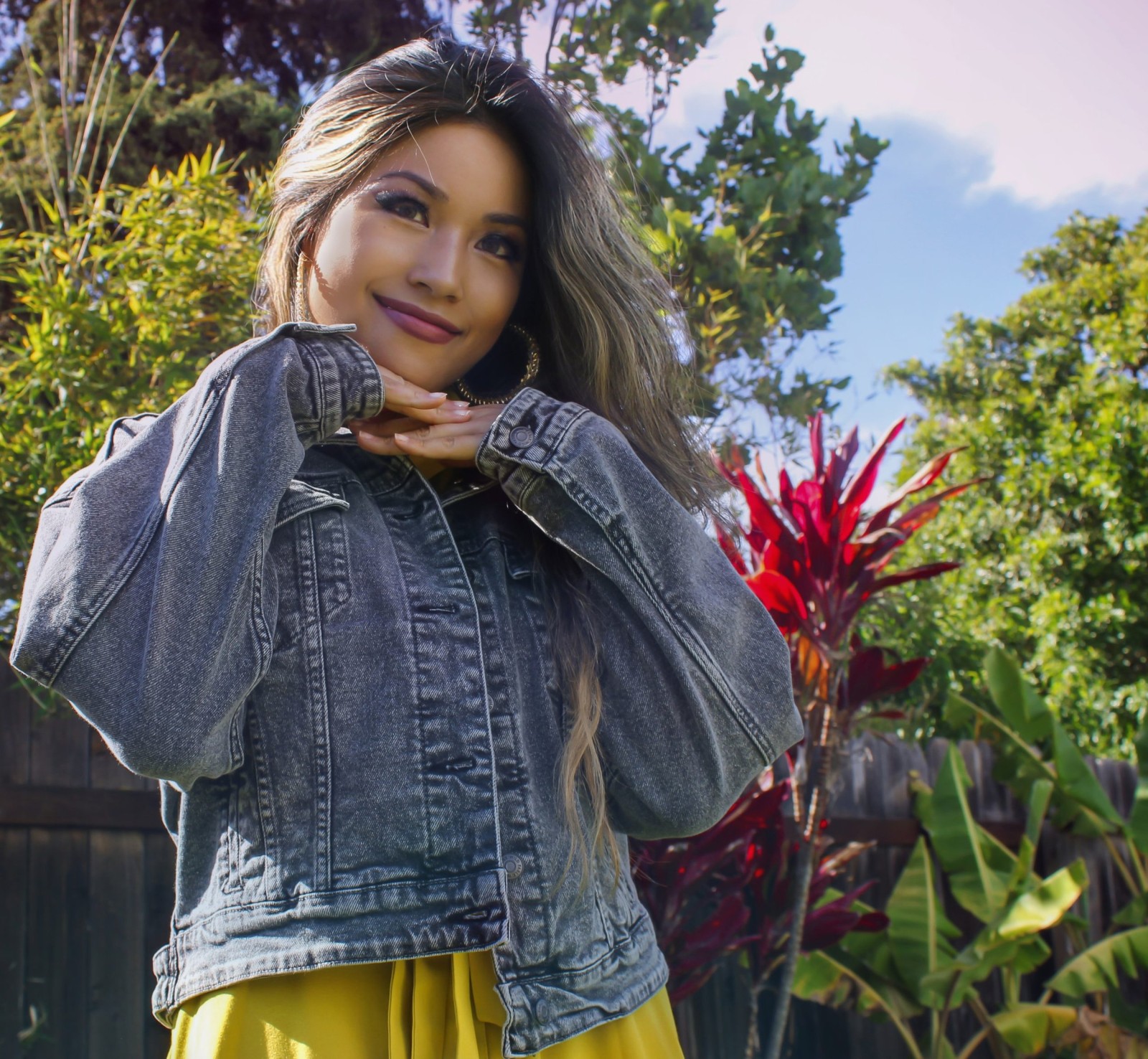
Sahtu Press continues our interview series with writers and creators across the globe to assist intercultural conversations on what it means to be creating in our modern times, finding our own voices, and reaching towards the outermost limits of our imagination. This month, we spoke with the talented Amy Linsamouth, co-writer of Vongfai!
A versatile voice in comics, Amy’s body of work spans multiple genres, ranging from the interactive horror comic Omens to the comedy series Byte Me. She notably co-wrote the comic adaptation of Descendants of the Undead alongside Dawn of the Dead’s Ken Foree, and brought Jackie & The Magical Guys to San Diego Comic-Con. We sent her a few questions to dive deeper into the ghosts, the family dynamics, and the rich history behind Vongfai. Here is what she had to say.
What’s one Lao ghost story you grew up with that still gets you?
Definitely the legend of Phi Kasu. It’s a nocturnal spirit. Basically, a floating woman’s head with trailing organs that glows and hunts for blood at night.
The story that really stuck with me came from my mom, passed down from her dad back in Laos. In their village, traditional houses were raised on stilts with open spaces underneath. My mom was very young at the time. And my grandfather, who was actually a cop, was outside when he spotted the neighbor boy fetching water across the way. Suddenly, he saw a glowing light tear past beneath the house. It was a disembodied woman’s head with something strange pouring from its eyes, hunting for blood. At the time, my grandmother had just given birth (which this spirit is supposedly drawn to), and my grandfather screamed very loudly before the light darted across the street and vanished.
Growing up, that imagery burned into my brain, especially because my mom rented Thai horror dramas on VHS from the local Lao grocery store. Back before satellite TV, she’d flip through photo binders at the counter to pick out horror tapes, and seeing that floating head on screen made my grandfather’s story feel more real. To this day, whenever I think of Lao paranormal activity, Phi Kasu is the ghost I think of.
Which character do you connect with most, and why?
I connect with Janida the most. Being the oldest daughter in an Asian family is an interesting thing to shoulder. I’m laughing (and maybe crying inwardly) as I type this. It’s like being another parent...
If the younger kid gets into trouble, the oldest takes the fall, which creates friction between us siblings. I’ve seen older daughters either stay trapped in that caregiver mode forever or completely snap and swing the other direction out of exhaustion.
On the surface, Janida might seem like the buzzkill of the pair because she’s the one holding everyone back from fun. But I think she’s someone who was forced to grow up too fast. I connect with her because she’s often the most misunderstood, yet her protectiveness and resilience help keep the family together.
Is there a scene you want to write that comes from your own family?
Yes, Vongfai connects three generations (the kids, the dad, and the grandma), and I want to show how historical trauma shapes the terrible communication at times between parents and their children. In Vongfai, we are not having the ghosts just as folklore. The ghosts can also be a metaphor for the real-world horrors that people lived through.
The scene I want to write comes straight from my mom’s survival in Salavan after 1975. Overnight, her family went from having a massive farm to surviving on watered-down khao piak, scavenging bamboo in the woods, and living under absolute terror. Curfews were enforced at gunpoint. If a girl had long nails, talked to boys, or slipped up, the threat was Samana (being shipped off to the re-education camps or sent to the prison island for women called Don Nang). You had to keep a lamp burning late so officials thought you were awake, and you couldn’t step outside your town without permission from the chief. My mom remembers when a neighbor was accused of talking to people in Thai refugee camps... the communists told him to “take a walk,” shot him in the woods, and left his bones to the animals. People (like my mom’s cousin) disappeared overnight, temples were suppressed, and the regime declared that nothing supernatural existed.
I want a scene where the younger kids face anyone from the older generation’s hardened exterior and finally uncover that truth. If kids realize what their parents survived (surviving starvation, surveillance, and real atrocities), it changes how they see themselves. I know that it can be didactic and tough, but it will give kids some reflection (like Anne Frank’s Diary) and maybe even hope. If your elders survived that darkness, you have the strength to survive anything, basically!
What part of Lao culture did you want to see on the page?
I want the cultural textures to be accurate (the folklore, the botany, the herbalism, and the spiritual cosmology/astrology). Kids are fascinated by grittier realities of the world, and Lao folklore has such tactile depth that rarely makes it into mainstream media. Remember books like Scary Stories to Tell in the Dark? (I was obsessed with that one!)
First, the dangerous alchemy of rural life sounds so interesting! Like traditional herbal poisons and village dark arts. Growing up, my mom told me about lethal contact toxins and ya sang (a deadly poison made from plants resembling sow thistles that envious people would secretly slip into food), or even coat on their hands to kill a rival with a simple handshake. Her youngest brother was actually murdered that way out of village jealousy. That specific sort of black magic/occult practice (saiyasat), where nature, dark rituals, and human envy come together, increases the stakes...
Second, I want to explore Buddhism, animism, and state ideology. I want real traditional rituals, the terror of possessing spirits like Phi Pop, and encounters with Phi Lok (trickster phantoms), like when my grandfather rode his motorcycle through the jungle 50 years ago and watched a full-sized water buffalo cross the dirt road and vanish into thin air.
Also, I want the clash between ancient spiritualists, the evolving role of monks, and the regime that tried to destroy it. When the communists took power, they claimed the supernatural didn’t exist and were more on the logical side of things, from what my mom told me, and they started outlawing French and policing tradition. I guess contrasting saiyasat and village folklore against political dogma gives Vongfai something that kids don’t typically see in mainstream media.
What story did you love as a kid that you wish had Lao characters in it?
Harry Potter. I devoured those books growing up, and when Cho Chang popped up (and Harry actually had a crush on her), I freaked out. Even though we had the Patil twins too, having any Asian girl front and center back then felt huge. But imagine how insane it would’ve been to actually see a Lao kid walking the halls of Hogwarts, bringing all of our cool folklore with them.
But what I loved most about it was the friend group, and that’s what I really want to bring into Vongfai. Lao families aren’t really built like typical American nuclear families. We’re all about community. Growing up in Rhode Island (the smallest state in the U.S.), even if I didn’t have a ton of school friends, I knew all the Lao kids because our parents dragged us to the same temple gatherings and the same chaotic house parties. We all swapped the same ghost stories while running around the living room.
So even if the catalyst starts at home with the family, I really want it to branch out into a tight group of friends. In Lao culture, you typically don’t face life alone. You have aunties, uncles, and MANY cousins. It’s more like Encanto. It takes the whole village, and that’s the vibe I want on the page later on.
What do you want a kid to feel when they close the book?
When kids close this book, I don’t want to push a heavy moral thing or preach an agenda. People don’t really bat an eye when Western fantasy leans into Christian allegory (like The Chronicles of Narnia with Aslan), so I want Lao folklore, animism, and history to be given that same epic weight.
More than anything, I want them to remember the rush of adventure and the high stakes of a world where things can be lost. I want them to feel the ache and heartbreak of growing pains, identity struggles, and the friends (or pieces of themselves) that fade along the way. And it can possibly all culminate in a massive battle where evil is finally beaten, and I want our protagonists to feel triumphant.
I want it to be something special. Not like a copy-and-paste fantasy, but a story that honors the grit, beauty, and magic of our Lao heritage, leaving kids with the realization that if their parents and ancestors survived the real-life darkness to get them here, they can face ANYTHING!!
Amy is also an Associate Producer on Ballroom, a film released September 25, 2026. Stream it on Apple TV, Prime Video, YouTube, and Google Play, or see IMDb.
Follow Amy on Instagram: @amylinsamouth