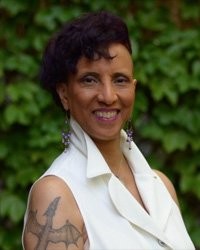
This month, Sahtu Press continues our new interview series with writers across the globe to assist intercultural conversations on what it means to be creating in our modern times, finding our own voices, and reaching towards the outermost limits of our imagination. This month we interview speculative poetry grand master and creator Linda D. Addison!
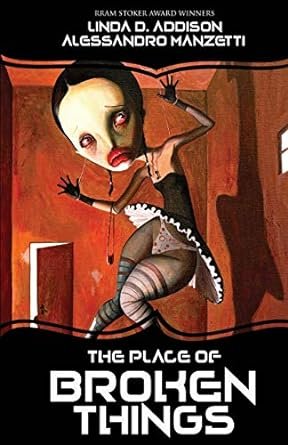
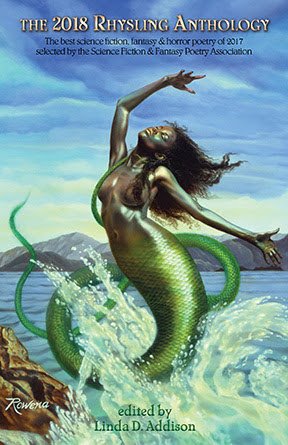
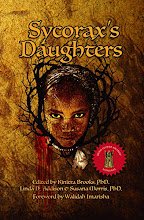
Linda D. Addison is the award-winning author of five collections, including The Place of Broken Things, written with Alessandro Manzetti, and How To Recognize A Demon Has Become Your Friend. A recipient of the HWA Lifetime Achievement Award, she is the first African-American recipient of the HWA Bram Stoker Award®, co-editor of Sycorax’s Daughters, an anthology of horror fiction & poetry by African- American women, and poetry editor of Space & Time Magazine since 2000. She served as the editor of the 2018 Rhysling Anthology and the HWA StokerCon Anthology 2019. Her work has made frequent appearances over the years on the honorable mention list for Year’s Best anthology. She has a B.S. in Mathematics from Carnegie-Mellon University and currently lives in Arizona. Addison is a founding member of the writer’s group Circles in the Hair (CITH), and a member of HWA, SFWA and SFPA.
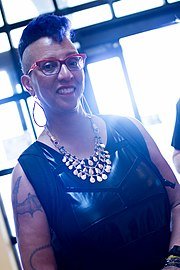
Sahtu Press: Can you tell us a little about yourself, and how did you develop an interest in writing?
LDA: I’ve always been a daydreamer from my earliest memories, boosted by my mother telling us fantasy-like stories at night that she made up. The first time a teacher read a fable from a book, Jack and Jill Went Up the Hill, I remember thinking that I wanted to make books. I didn’t know that it was poetry, but I loved the rhyming and I’m sure that was the beginning of poetry getting hold of me.
All the years since I still daydream the world around me into speculative scenarios and that drives my writing, as well as my curiosity about everything. The more I read (science, psychology, etc.) the wider my imagination grew. My early writing was more SF and fantasy, influenced by the science-fiction I read (Asimov, Bradbury, Octavia Butler, Pohl, etc.), then in college I began reading horror (Stephen King, Anne Rice, Peter Straub, etc.) which lead me to begin digging into my fears and writing about them. Writing horror wasn’t a huge reach because my Mom and I loved watching “scary movies”.
SP: What are some of your favorite things to study, and how has this shown up in your poetry?
LDA: In junior high school I started taking books out from the library about human psychology because I was driven by curiosity to try to understand my feelings and the actions of others around me.
In college I fell in love with multiple realities, quantum mechanics and had always loved mathematics. I graduated with a B.S. in Mathematics from Carnegie-Mellon University at a time when quantum mechanics was still being questioned, but that didn’t decrease my love of the concepts. My imagination fed on the ideas that science bought up. I also studied the lives of other writers, the process of creating, the business of marketing work.
My first published poems were about the writing process (Bard Wellington, poem written like a recipe); a vampire poem (One Night Stand, a poem I still love to do at readings); and my poem, Why The Dinosaurs Died, which was my first publication in Asimov's SF Magazine (after many years of rejections). I still find reading about science and human psychology, etc. inspires my writing.
SP: Who do you turn to for your literary inspirations?
LDA: There are so many authors that inspire me that I couldn’t easily list them, not including new writers that I discover each year. When I’m working on a new piece and feel the need for energy I’ll grab a book from my bookcase of writers I like for their pacing, dialogue, characters, etc, turn to a random page and read one or two paragraphs out loud.
For example, fiction: Tananarive Due, Weston Ochse, Elizabeth Massie, Joe Lansdale, Nancy Kress, Maurice Broaddus, Octavia Butler, Nisi Shawl, Jonathan Maberry, Ace Antonio-Hall, Charlie Jane Anders, etc.
For example, poetry: Alice Walker, Marge Simon, Toni Morrison, Sheree Renée Thomas, Poe, Maya Angelou, doungjai gam, Eugen M. Bacon, etc.
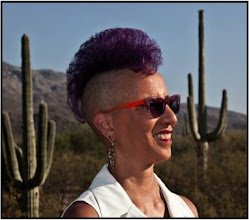
SP: What has it been like being a speculative poet in Arizona?
LDA: It’s been quite wonderful. I moved here from New York to retire from my day job and write full time, which was like winning the Golden Ticket. I’ve made contact with different creative communities here and I’m a member of a couple of writing groups. Also there are conferences here in town that are inspiring for a writer to attend: Tucson Festival of Books, TusCon SF Convention.
SP: What do you feel international readers would find interesting about the state of speculative literature these days?
LDA: There is growing exposure to international speculative writers which makes me very happy. I’ve always found inspiration in reading fiction and poetry reflecting other cultures and countries. For example, the Science Fiction & Fantasy Poetry Association (SFPA) publications like the Rhysling’s anthology and the Star*Line magazine usually includes work for poets outside of America. The Horror Writers Association (HWA) also reaches out to acknowledge the work of writers outside America. As the poetry editor for Space & Time magazine I’ve seen an increase in submissions from other countries.
SP: You've received many distinctions for your work in horror. If you had to guess, what are some of the emerging directions you see horror literature taking in the next few decades?
LDA: It’s hard to guess at what emerging directions horror literature will take but I suspect the mix of technology like the newly released Apple Vision Pro with the images, music, storylines, characters of written horror will combine to create more immersive experiences for fans; experiences that can merge with their actual environments.
SP: What's the best compliment you've received for your writing so far?
LDA: I’m told that my poetry is accessible by people who don’t normally read poetry and that is deeply satisfying. I share on social media my Life Poems (short poems that come to mind after daily meditating and they invoke comments from others about how much they touch them, which is wonderful to know.
SP: What's one of the most unusual subjects you've taken on with your writing?
LDA: In general, I love being challenged to write something I haven’t created before, either in subject or form. Per forms, I’ve written drabbun (mix of drabble & haiku), fibonacci, haiku, imayo, sonnet, tanka, etc, but my favorite form is Concrete poetry (shape poems) because it can be different every time. I explored this form when Stephen M. Wilson (who was well versed in the form) and I collaborated on our music inspired poetry collection, Dark Duets.
Some times I know I want a shape before I start the poem because of its subject, like my candy corn shaped poem D2D Candy Corn (Southwest Review magazine, Halloween issue); other times as I write the poem I am inspired to create a shape, like The Butterfly Affect, (Were Tales: A Shapeshifter Anthology) with a shape that hints at wings.
A recent fun, unusual subject was writing a poem, Relentless Realities & Impossible Intention, for A Unioverse Anthology published by Hex Publishers & Random Games. The authors were given access to Random Games’ Unioverse team and game world to write work. It was a exciting environment to explore for inspiration and the editors were open to any new ideas from us that could influence the gaming environment.
SP: What do you often say to emerging writers to inspire them to keep writing?
LDA: To write everything down, every word, idea, etc. that comes to you. I’ve been journaling since 1970, and those bits and pieces of poems, story ideas, characters, etc. are the seeds I use to write from, whether for an individual piece or when I decide to start a new collection.
Try to write almost every day, whether journaling or working on a new piece. Set aside a time, 15 minutes to sit down and write. I have said the Expectations are a Dream-killer, a saying I didn’t create, but have embraced. If we set an expectation to write a certain number of words, don’t make the number, and that makes us stop writing because of being disappointed, then that’s not a good approach. If that happens I would suggest set the expectation for one new word (not rewritten words) so you can continue to sit down to write. What happens is that you will write more than one new word.
For my writing, it’s very important to get the beginning, middle and end written, no matter how good it is and then start the edit process. The first version allows me to capture my first inspiration/mood of the piece, editing may change that.
Once it’s edited as well as you can, try to find someone who can read it and give you feedback, if not reading your work out loud can help you find any places that may need work.
The last step for me has always been finding a market to send my work to because I love to see my work in print. This involves researching publications to make sure your work fits their guidelines (note, if they don’t say what they want for layout, look up Standard Poetry layout online).
Write —> Beginning/Middle/End —> Edit/Feedback —> Submit ==> Repeat
SP: What’s next for you?
LDA: I have poetry coming out in 2024 in some fantastic projects, some I can mention: Spacefunk anthology edited by Milton Davis (which I’m so over the moon to be in since I have such respect for all the books Davis publishes and now to be in one with incredible authors); Playlist of the Damned edited by Jess Landry and Willow Dawn Becker has a poem of mine and their Rock Stars of Horror Collector’s Cards has my flash fiction on one of the cards, based on haunted music; Enter Boogeyman anthology edited by Alessandro Manzetti contains a story by me that I’m excited about.
I’m moving into the novel lane, which is a whole new way of telling a story from poetry. My first completed novel is Science-Fiction. Working on my second novel, it’s been a fun adventure so far.
Also coming is the release of the show “Madness & Writers: The Untold Truth. Maybe?” by Executive Producers Velva Carter-Maloof and David Maloof, directed by Jamal Hodge with me, Josh Malerman and Michael Bailey in the first episode. You can find an extended trailer on YouTube.
***
Be sure to visit Linda’s website to keep up to date on all of her amazing projects!