Sahtu Press continues our new interview series with writers across the globe to assist intercultural conversations on what it means to be creating in our modern times, finding our own voices, and reaching towards the outermost limits of our imagination. This month we interview speculative poet and creator Hannu Afere!
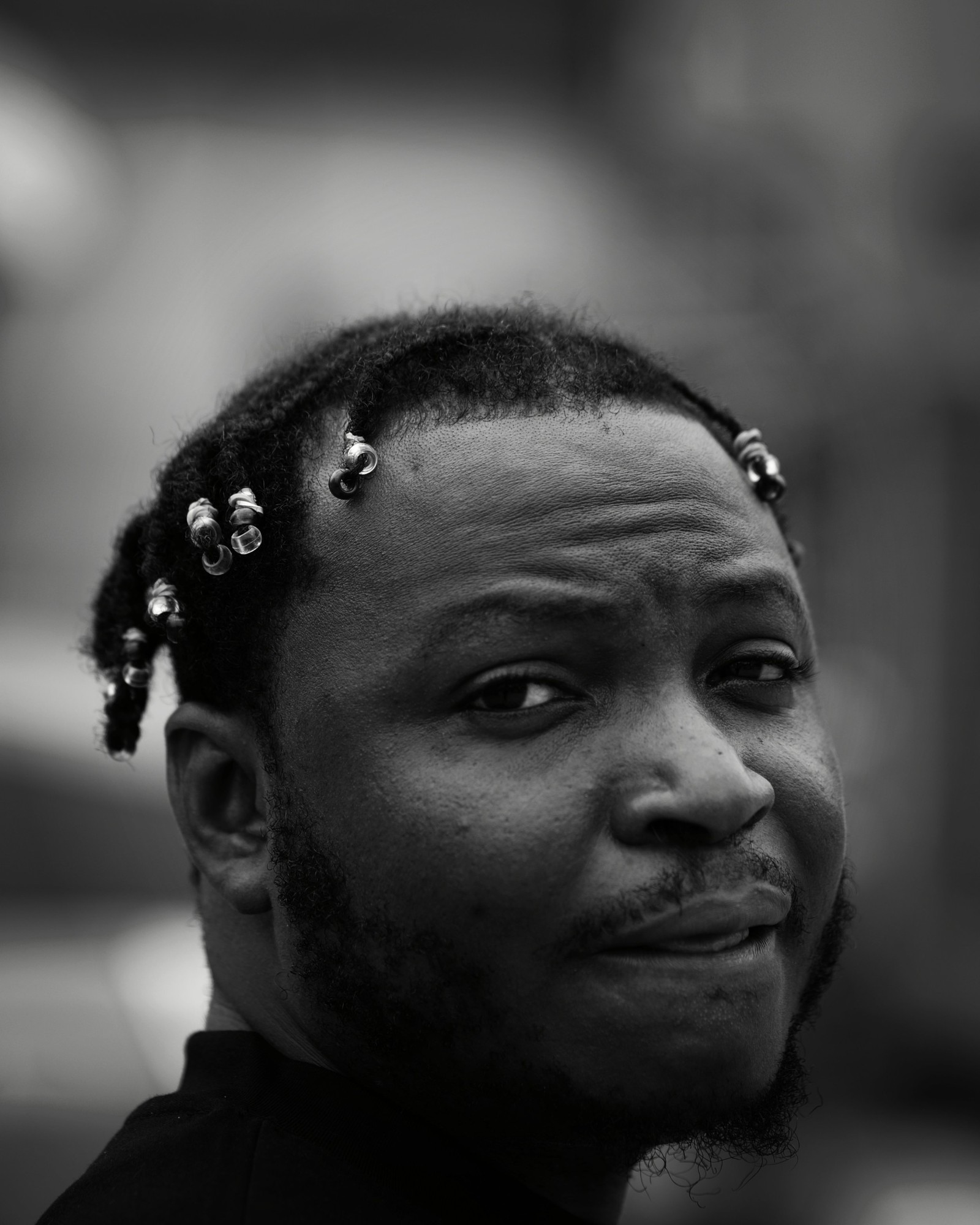
Hannu Afere is an author, animator and artiste whose work has appeared in several publications in Nigeria, China, Canada and the US. He co-authored the critically acclaimed graphic novel Trinity: Red October in 2018 and in 2019, his debut collection of short stories GrimGrin: WTF was published. His novella Dog Days of Rain was published in 2020 during the COVID-19 pandemic; and in 2021, he wrote the screenplay to The Adventures of Captain Blud, an animated series with the Nobel Laureate Professor Wole Soyinka. In 2022, his short story Dogz of War was nominated for the British Science Fiction Awards.
Presently, he is the Editor-in-chief of the Anthology of West African Literature (8th House Publishing, Montréal), and he is collaborating with the Lao Minnesotan Poet Laureate Bryan Thao Worra on a book of poems titled Laos N Lagos. When he's not creating or collecting art, he can be found spending quality time with his partner Didi, and their canine companions, Rain and Roulette. He writes from Lagos.
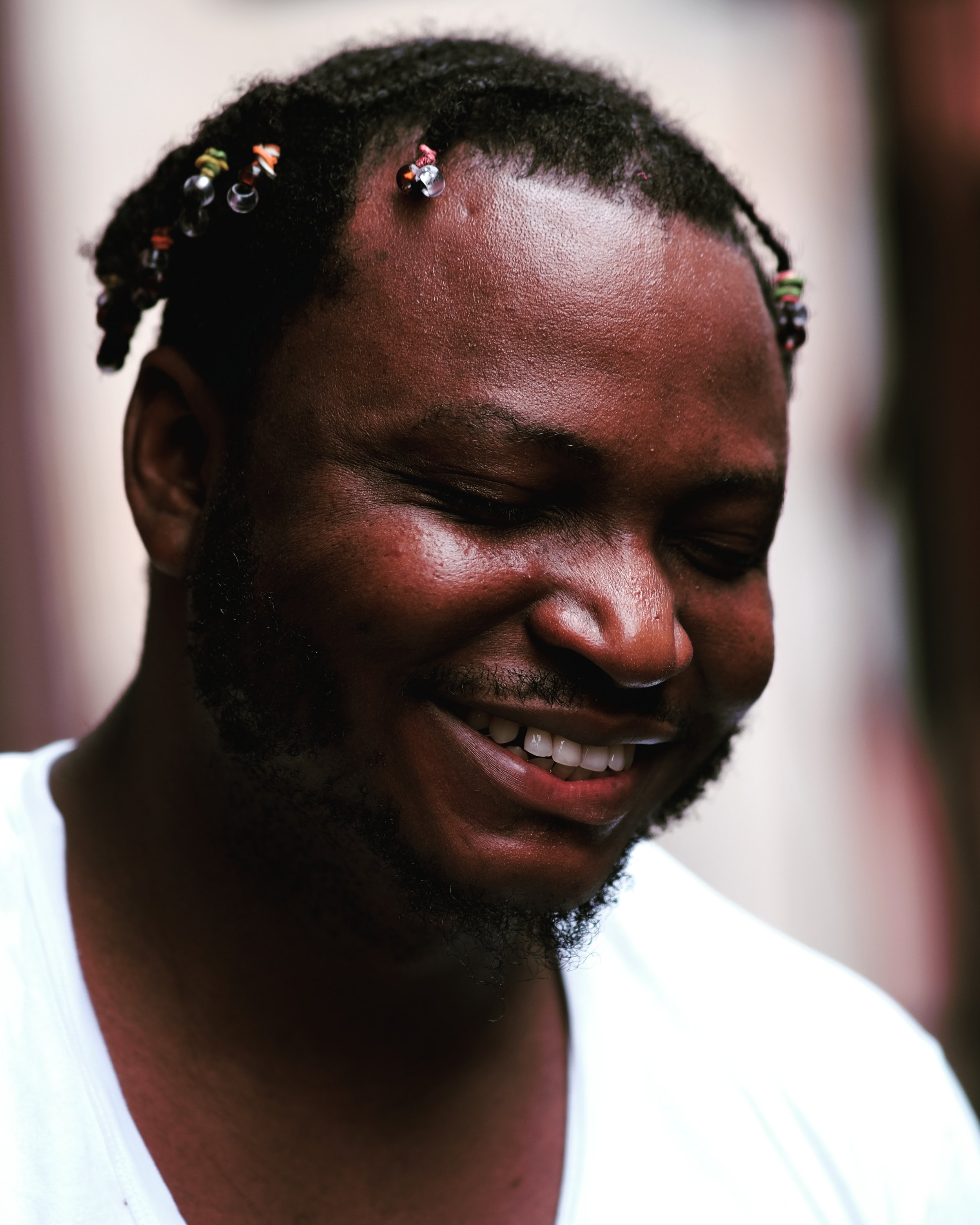
Sahtu Press: Can you tell us a little about yourself, and how did you develop an interest in writing?
Hannu Afere: I grew up in a Pentecostal household where TVs were seen as the “devil's box”.
The church argued that a gadget like that, with its immoral messaging and addicting nature, was not fit to exist in the same house as a believer. I can still remember the day my father gave the television away, because the church wanted to use our house for Fellowship. I was so angry and sad. It turned out to be a blessing however, because books were all I had after that.
Naturally, the writing started with not liking the way a read ended, wanting to write my own, or sometimes wanting to draw the characters differently. The first book I felt so strongly about was Elechi Amadi’s The Concubine. I hated the tragic ending so much, I wrote my own version of things where Ekwueme and Ihuoma lived happily ever after, and her evil spirit husband was banished away to hell.
I read voraciously and filled notebook after notebook with stories. But I wasn't sure I wanted to be a writer. All my parents talked about was me being a doctor. It didn't help that I was in the top 5 in my science class.
Then I represented my school on national TV during an Essay writing competition. It wasn't even meant for my class, I was a junior. I came 12th in the whole state and after that I was just like, “yep”, I am good at this thing, I belong here.
Right now, I write poems, prose and screenplays, and it's enough to take care of the bills.
SP: What are some of your favorite things to study, and how has this influenced your approach to writing?
HA: Human physiology and psychology. It helps that I've got a bit of a medical background, and I'll tell you, body horror is fascinating. Understanding how the intricate systems of the body function and interact with the mind has given me a unique perspective on crafting realistic characters and scenarios in my writing.
I love learning about nature, because the diversity is so awe-inspiring. I am a bush boy—my surname literally translated is “like a fleet footed leopard”. I love studying animals and animism.
Shortly after the pandemic in 2020, I began to explore the Hyena-men phenomenon, cases where folks claimed to be able tame and become Hyenas using magic. My research took me all the way to Senegal where I became aware of the fact that there are wolves in the Serengeti. But there were never any werewolf cases, because the wolves in West Africa are so small (when compared to their American or Siberian counterparts).
Exploring animism and the speculative has greatly improved my storytelling and allowed me to incorporate vivid and authentic descriptions into my writing.
SP: Who do you turn to for your literary inspirations?
HA: I guess it depends on the task at hand, and the state of my mental health. I can't name them all.
Sometimes it's Wole Soyinka, sometimes it's Bryan Thao Worra. Other times it's Chinụa Achebe. Stephen King. Haruki Murakami. George Orwell. Yukito Kishiro. Chimamanda Adichie. Hayao Miyazaki. Anne Rice. Agatha Christie.
And I am forever in awe of D.O Fagunwa who wrote speculative fiction in my native tongue, Yorùbá, as far back as 1938. Of course, he was influenced by Christianity and to an extent, his work had a didactic bent, but it left a serious impact on me.
Then of course, there was Cyprian Ekwensi, Chukwuemeka Ike and Anezi Okoro. I still go back to read them for nostalgia.
SP: What do you aim to achieve with your writing?
HA: I aim to elevate Nigerian Speculative literature, and poetry in particular to greater prominence. While elements of Nigerian culture occasionally surface on big platforms, I think there's still a lot that can be done. In the near future, I hope to contribute to putting Nigerian Speculative poetry firmly on the map and fostering broader recognition for its unique voice and narratives.

SP: What would international readers find interesting about the state of Nigerian literature these days?
HA: Nigeria’s got some of the finest storytellers—both within the continent and in the diaspora. I am particularly excited about Bernardine Evaristo’s 2013 novel Mr Loverman which is being adapted for TV by the BBC and Fable Pictures. There is a Netflix adaptation of Tọlá Okogwu's brilliant novel Onyeka and the Academy of the Sun. A lot of poetry anthologies and plays; novels from the regular award winners and debut authors too. And oh, Children of Anguish and Anarchy by Tomi Adeyemi. Hymar Idibie of the I for don blow fame has a new book coming out, OD Ekpeki has a new book coming out as well. Pardon me, I'm geeking out. I think international readers would find the landscape of our literature captivating. There is something for everyone.
In 2023, we gave you Afrobeats, in 2024 we're going to give Naija Lit.
SP: What's the best compliment you've received for your writing so far?
HA: Random people telling me how they can't stop thinking about something disturbing I wrote? It gives me joy. My job is literally to disturb the comfortable and comfort the disturbed.
Also, there was this one time Akua Lezli Hope sent me an email saying “You are delightful! Such fun, such painful, moving work. Bless you.” I didn't expect her to say that. I love her.
SP: What's one of the most unusual subjects you've taken on with your writing?
HA: During the covid 19 pandemic in 2020 I began working on a re-imagination of the Yorùbá pantheon, placing them within future timelines where magic and science coexist.
So, where the Òrìṣà Shango exists as the god of thunder, for instance, he becomes the God of Electricity and storms— spelled with a capital ‘G’; Ògún becomes the God of Technological Innovation, Ṣìgìdì becomes a vengeful AI, etc. This speculative approach delves into intriguing questions about their involvement in historical events like the slave trade—probing whether it was allowance, complacency, greed, or avarice that shaped their role.
It is a delicate thing, a balancing act if you will. Because on one hand, I'm writing something the OGs and Traditionalists can see and say ‘ah, this one knows his roots’, but on the other hand I am giving it a futuristic twist.
SP: What’s next for you?
HA: I've got a book of poems coming out called Half Chewed Liver. It will be quickly followed by my debut novel To Kill A God. Both from Ala Africa
Publishing. Thereafter, we'll be seeing some of my short stories adapted for screen. I can't give more information on that at the moment, but by the end of this first quarter, I'll be making the announcements on my newly minted website www.thehannugator.com