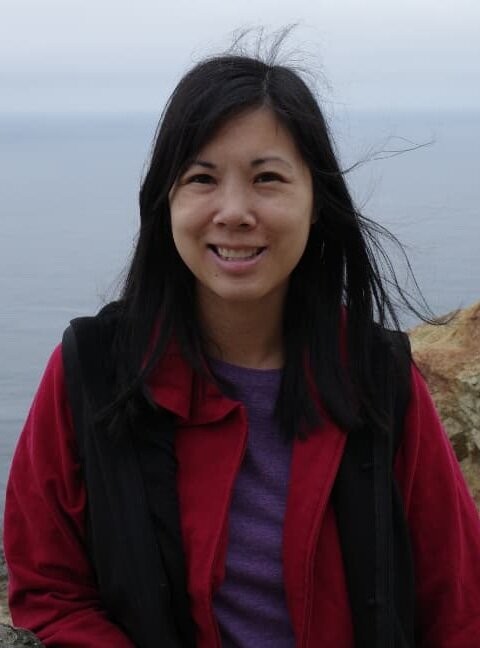
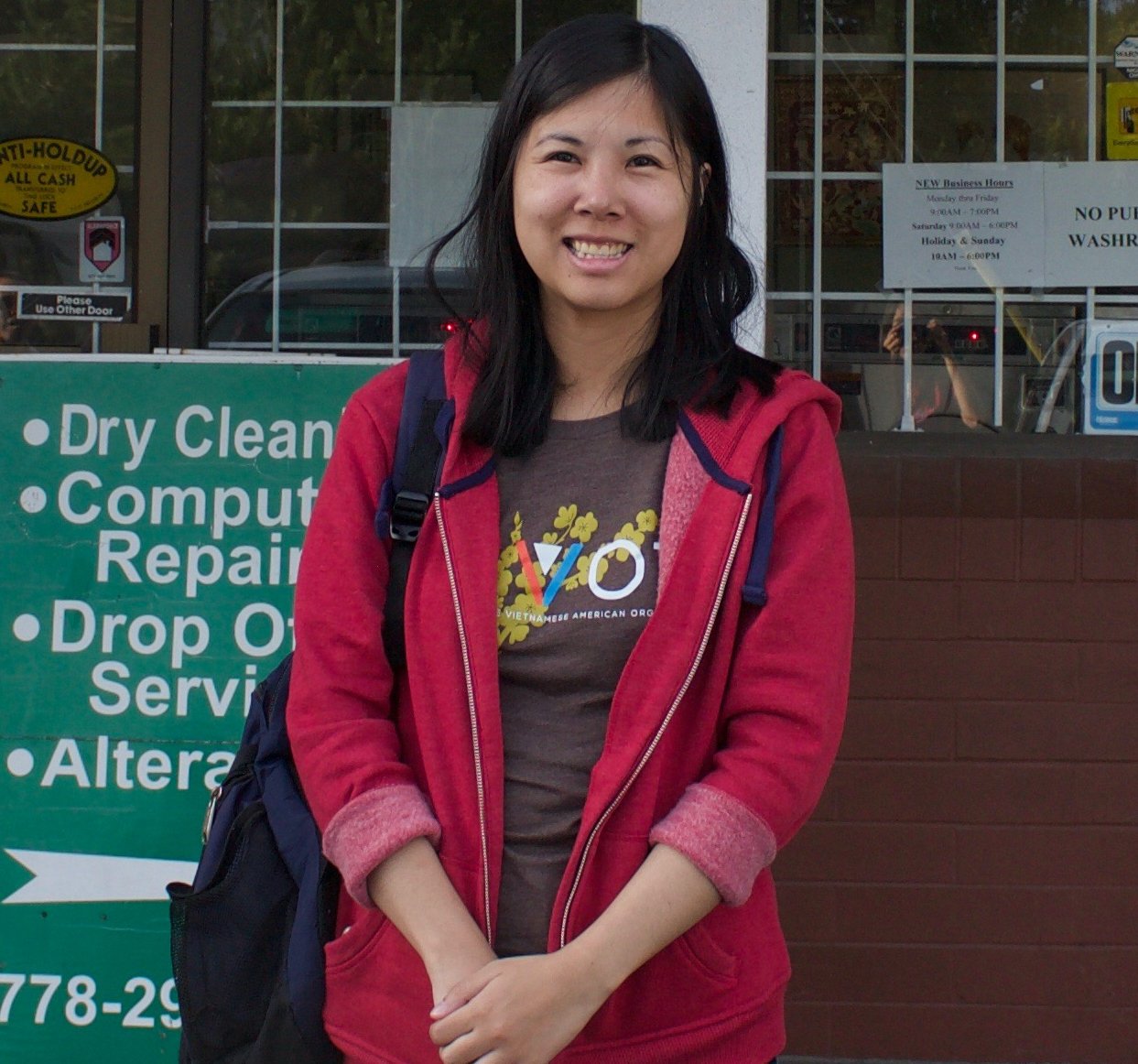
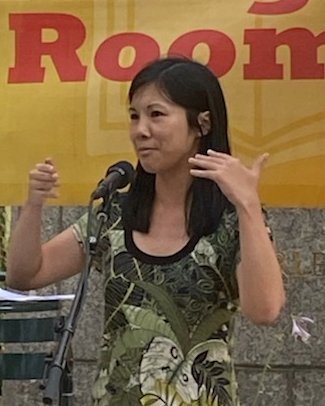
Sahtu Press continues our new interview series with writers across the globe to assist intercultural conversations on what it means to be creating in our modern times, finding our own voices, and reaching towards the outermost limits of our imagination. This month we interview Vietnamese American poet and doctor Jenna Le!
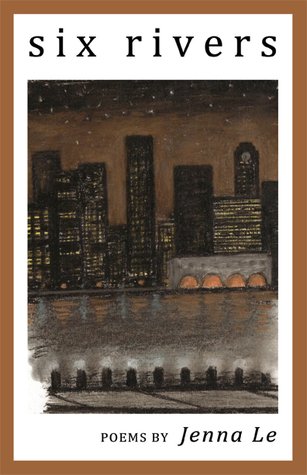
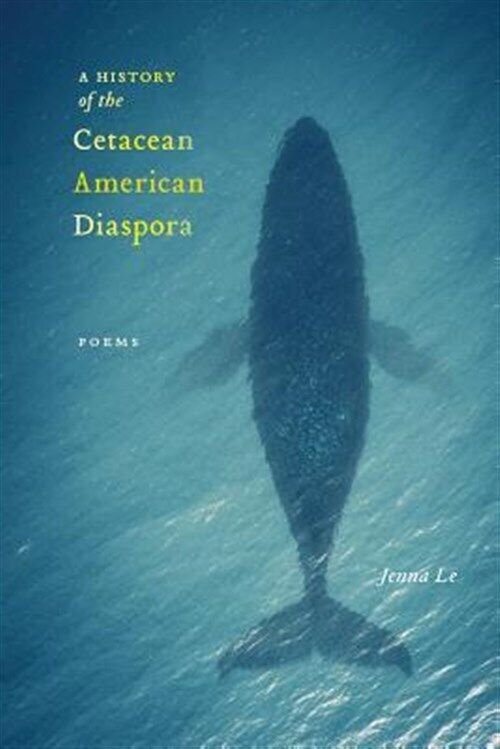
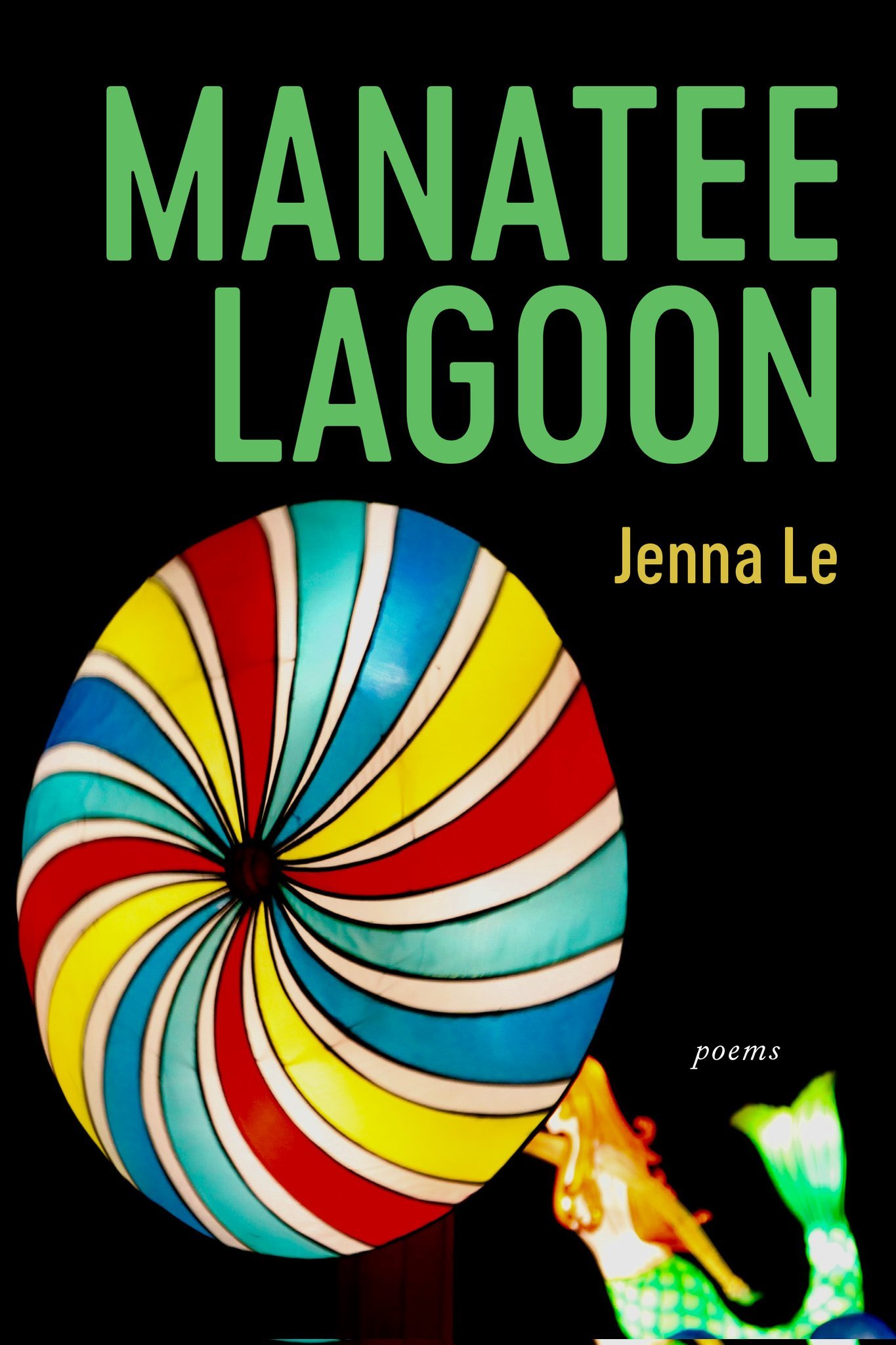
A Minnesota-born daughter of Vietnam War refugees, Lê grew up outside Minneapolis and earned her B.A. in Mathematics from Harvard University and her M.D. from Columbia University. She lives and works in New York City. Six Rivers (NYQ Books, 2011), her first full-length poetry collection, was a Small Press Distribution Poetry Bestseller. Her second full-length poetry collection, A History of the Cetacean American Diaspora (Indolent Books, 2018; first edition: Anchor & Plume Press, 2016), won Second Place in the 2017 Elgin Awards, voted on by the international membership of the Science Fiction and Fantasy Poetry Association. Manatee Lagoon, Le’s third full-length poetry collection, was published by Acre Books in October 2022.
Le’s poetry, fiction, essays, book criticism, and poetry translations have been published widely. Le was selected by Marilyn Nelson as the winner of the Poetry By The Sea Conference’s sonnet competition (later renamed the Kim Bridgford Memorial Sonnet Contest) and by Julie Kane as the winner of Poetry By The Sea’s sonnet crown competition (later renamed the Kim Bridgford Memorial Sonnet Crown Contest). Le has also been a Minnetonka Review Editor’s Prize winner, a two-time Alpha Omega Alpha Pharos Poetry Competition winner, a Filoli Haiku Contest finalist, a William Carlos Williams Poetry Competition finalist, a Michael E. DeBakey Poetry Award finalist, a ten-time Pushcart Prize nominee, a three-time Best of the Net nominee, a Best Small Fictions nominee, and a Rhysling Award nominee. Le is a Poetry Co-Editor at Pulse: Voices From the Heart of Medicine and also serves on the editorial boards of the Journal of Medical Humanities and the Pharos, the journal of the Alpha Omega Alpha Medical Honor Society.
Sahtu Press: Can you tell us a little about yourself, and how did you develop an interest in writing?
Jenna Le: As a child, books were my life. Even at 4 or 5 years old, I remembered loving their materiality, their thing-ness, their solidity and smoothness and durability in my hands. Emotionally, I was inflamed by the ability of stories to transport, to age, to time-travel. Through the walls of our house, I would overhear my parents watching Chinese soap operas in the TV room late at night, and I would write stories and plays in my college-ruled spiral notebooks, trying to imagine what the plots of such TV dramas must be like, using writing to carve an inroad into what I pictured to be their glamorous adult world, a world from which I, as a child (and not just a child, but the youngest child in my household), felt excluded. After I discovered the books of Lewis Carroll as an elementary-schooler, the "writing bug" gripped me especially hard: I felt my imagination freed to go places that I had previously not thought possible. I was just a very emotionally hungry child (and continued to be one well into adulthood), yearning for a reality beyond what I knew, and writing seemed to me the way to get there.
SP: What are some of your favorite things to study, and how has this influenced your approach to writing?
JL: I'm very interested in visual art, and lately my writing has been colored by my study of the lives and works of such artists as Van Gogh, Ruth Asawa, and Louise Bourgeois. I'm endlessly interested in names and etymologies. Also, animals and plants: for example, once you look up what makes blue jays blue, you'll never look at them the same way again. Additionally, I have a perennial fascination with mythology and folklore -- Greek, yes, of course, but also mythologies from other cultures. The structures of the stories we grow up reading have an enormous influence over how we understand the world for the rest of our lives, I believe. The rhythms of the story arcs, the climaxes and denouements; which kind of events offer an adequate sense of resolution, and which don't. We're subconsciously taught these things by the fairy tales that are read to us as infants, and they become absorbed into a kind of muscle memory, which goes on to mold the narratives we tell about ourselves forever after. So there's really nothing more important or more interesting than fairy tales and fantasies.
SP: Who do you turn to for your literary inspirations?
JL: Although I read new books as often as I can, I keep returning the inspirations of my childhood and youth: the Brontes, Jane Austen, Edna St. Vincent Millay. The caginess of the Vietnamese poet Ho Xuan Huong. I'm a sucker for caginess, psychological defense mechanisms, plausible deniability, stubbornness, secretiveness. Poems that hide but want to be found, poems that transgress but want to get caught.
SP: What do you aim to achieve with your writing?
JL: Magic. I want to emotionally transport you.
SP: Was anything different about your process this time around in creating Manatee Lagoon?
JL: On the surface, the process was similar to what it was with my previous books. But as we grow and change, our art grows and changes -- that is, as long as we resist ossification. Manatee Lagoon has certain things in common with my first two books, Six Rivers and A History of the Cetacean American Diaspora, the most obvious being a connection to marine mammals and bodies of water. But it's a very different book. I do think it contains some of my best poems to date. I think one writes differently in one's thirties than in one's teens and twenties. I have more confidence now than I had before.
SP: What do you feel international readers would find interesting about the state of Vietnamese American literature these days?
JL: It's incredibly diverse. There are tons of Vietnamese American writers out there who are producing amazing work, not just the two or three you may have heard about. Some have been embraced by the mainstream, but some haven't and may never be. Dive deep and you'll find plenty of gems.
SP: What's the best compliment you've received for your writing so far?
JL: Being told that my poetry generated an emotional response: that it made someone cry, for instance. It's like when Robert Lowell said, "I wish that they'd say that I'm heartbreaking."
SP: What's one of the most unusual subjects you've taken on with your writing?
JL: I firmly believe no subjects are off-limits. I once wrote a poem about earwax. I wrote it after reading an article in the Atlantic by Ed Yong about how whale earwax can tell you all kinds of things about a whale's life, just as tree rings can tell you all kinds of things about a tree's life. During the decades when whale-hunting was widespread, stress hormone levels in whale earwax spiked. And that made me think about our own human relationship to earwax, the shame and embarrassment surrounding it, the genetic differences in odor and texture, and everything else.
SP: What’s next for you?
JL: I'll have to wait and see! I'm not the biggest planner. I often hoard acorns without a long-term vision in mind. I like feeling the acorns in my hands.
You can follow more of Jenna Le’s journey at https://jennalewriting.com including her newest collection, Manatee Lagoon!